
About Kumbh
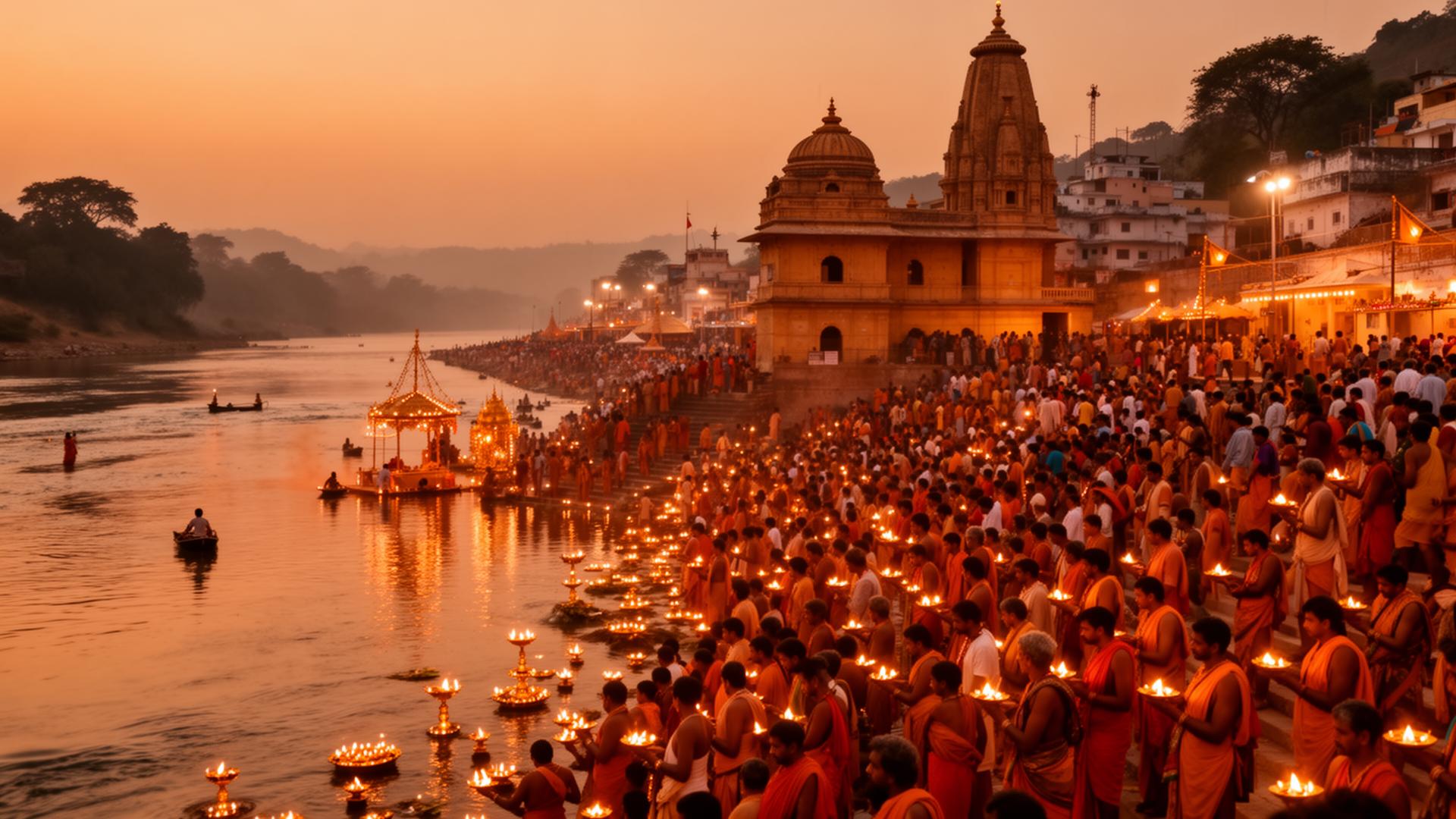
Discover the spiritual significance, heritage and traditions of the Nashik–Trimbakeshwar Kumbh Mela — a journey through mythology, ritual and pilgrimage refined over centuries.
History, Mythology & Spiritual Significance
The story of the Nashik–Trimbakeshwar Kumbh, woven from scripture, river and ritual.
The Legend of Samudra Manthan
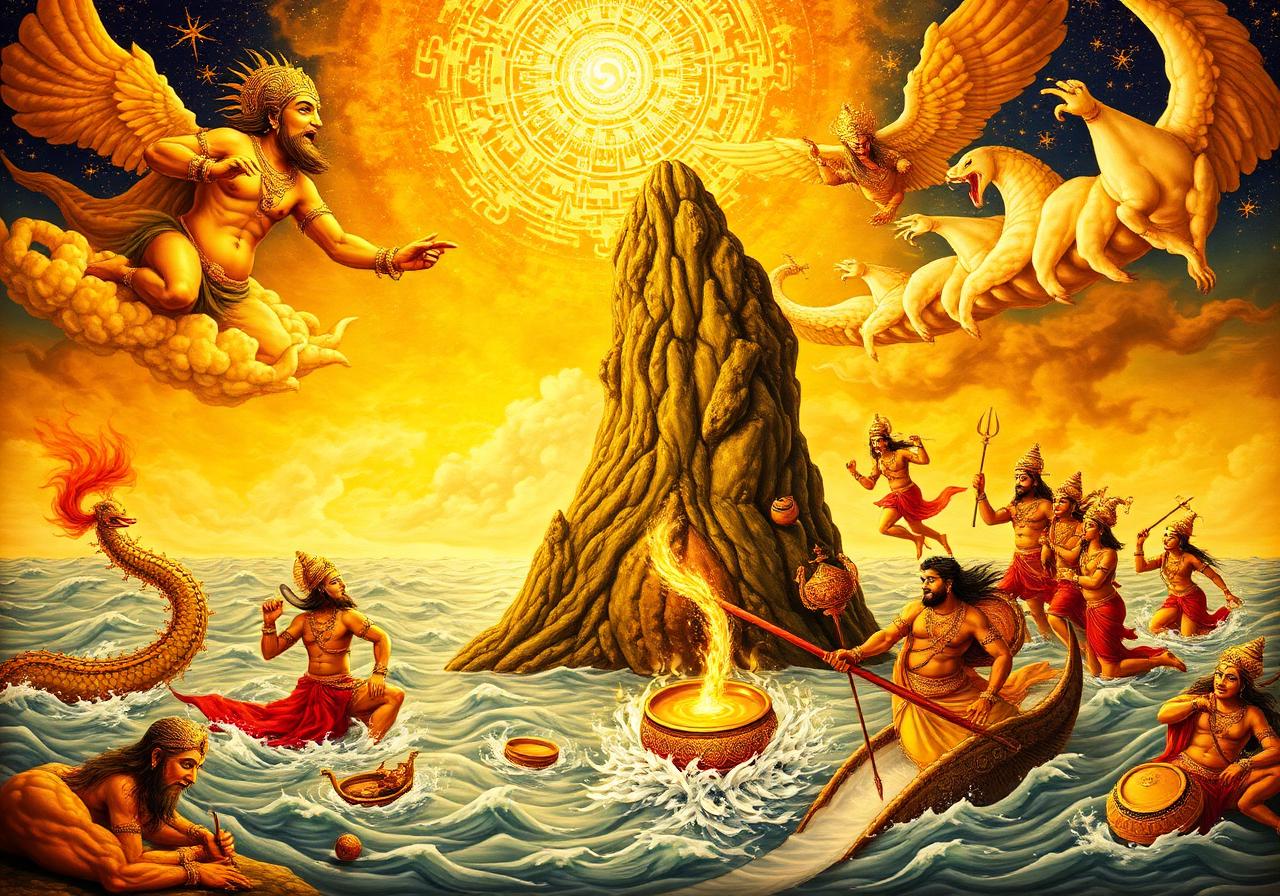
According to the Puranas, the devas and asuras churned the cosmic ocean to obtain Amrit — the nectar of immortality. As Garuda carried the pot away, four drops fell upon the sacred soil of Bharat — Prayagraj, Haridwar, Ujjain and Nashik. Wherever a drop fell, the very rivers became gateways to liberation, and once every twelve years the heavens align so devotees may bathe in those waters and free themselves from the cycle of birth and rebirth.
- One of four sacred Amrit sites in India
- Held every 12 years on planetary alignment
- Rooted in the Bhagavata & Skanda Purana
Nashik · The Southern Gateway
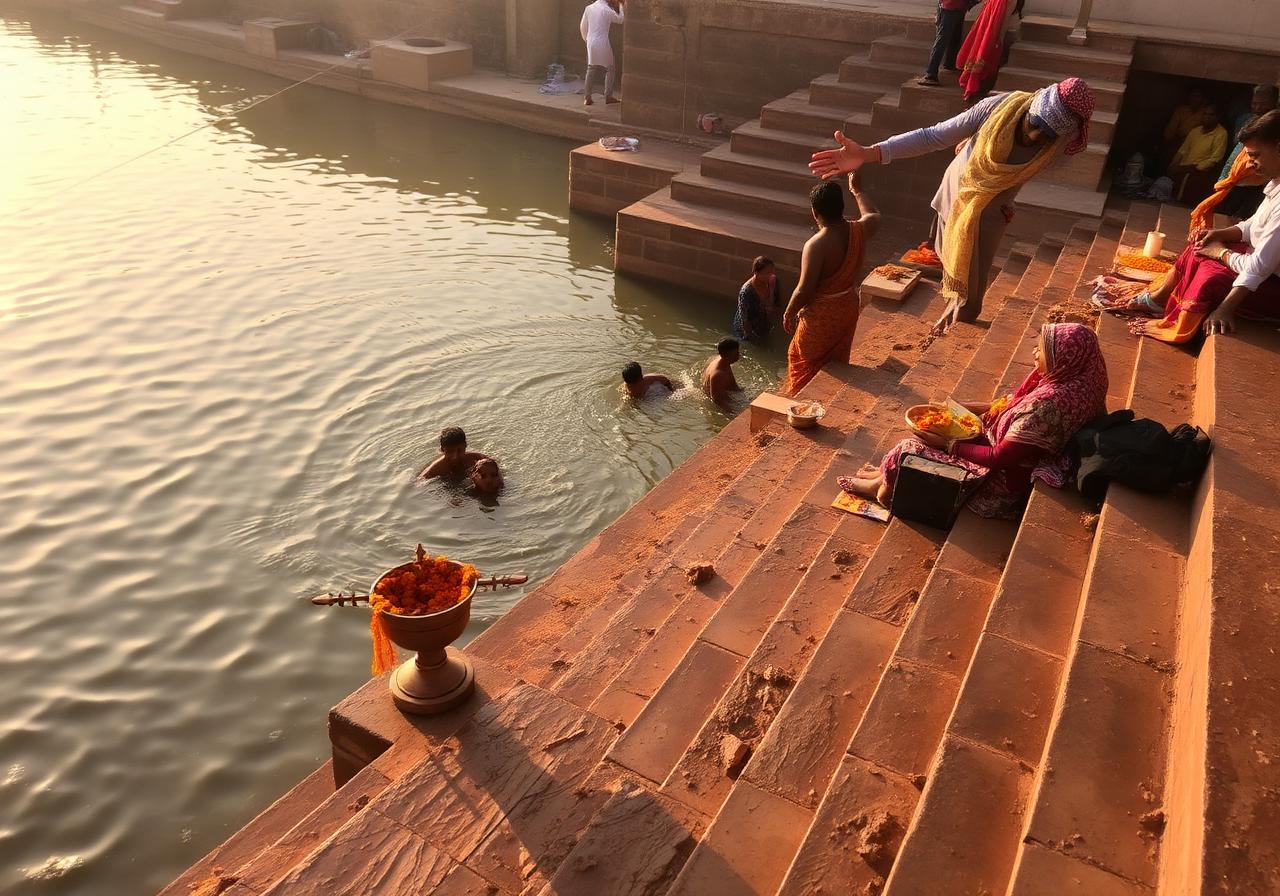
Nashik is the only Kumbh site on the Godavari — Dakshin Ganga, the Ganga of the south. Ram Kund, where Lord Rama is said to have performed the last rites of King Dasharatha, has been the spiritual nucleus of the city for centuries. The 32 ghats lining the river form a continuous prayer of stone, water and lamp light through which generations of pilgrims have walked toward release.
- Ram Kund — origin of Nashik's sacred identity
- 32 ghats along the Godavari river
- Linked to the Ramayana and Panchavati
Trimbakeshwar Jyotirlinga
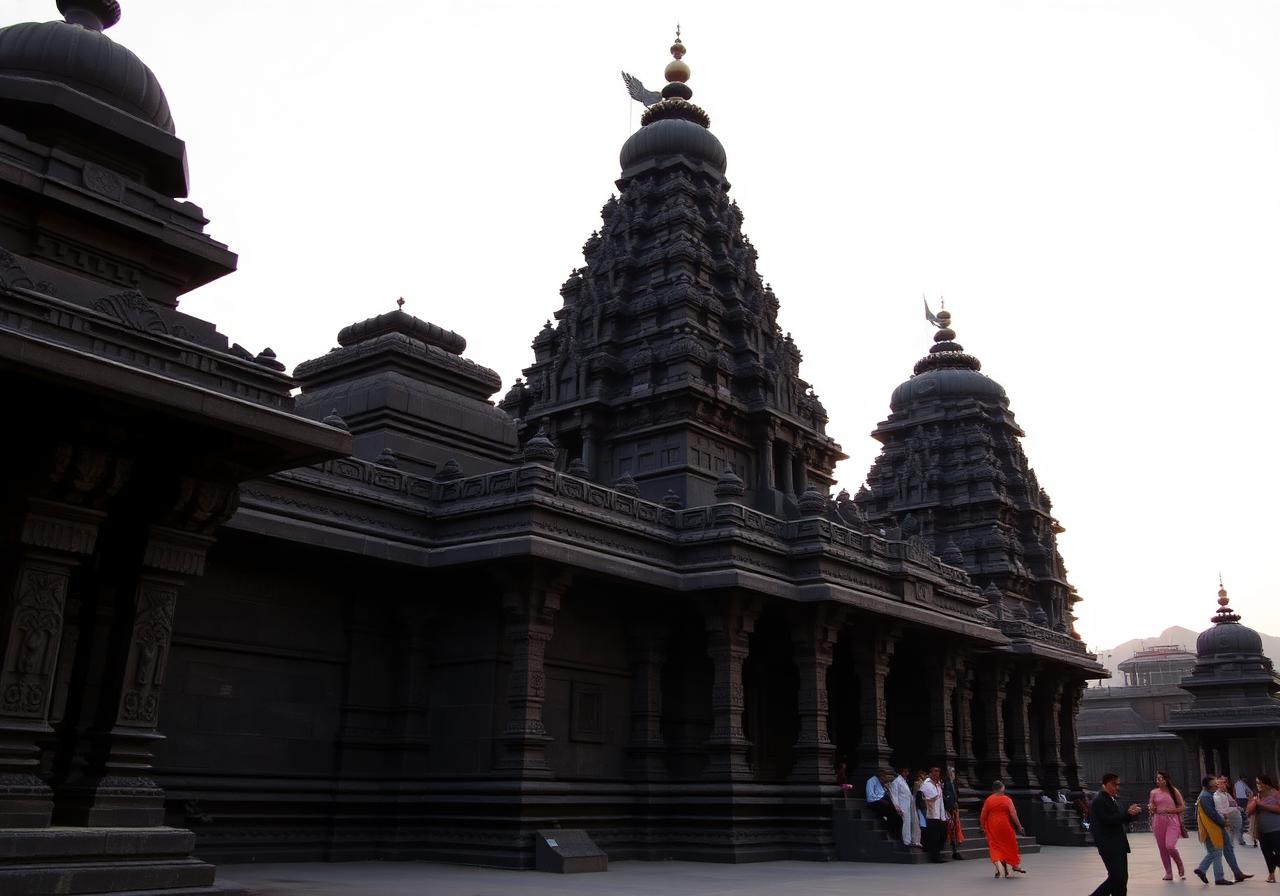
Twenty-eight kilometres west of Nashik lies Trimbakeshwar — one of the twelve Jyotirlingas of Lord Shiva and the source of the Godavari at Brahmagiri hill. The temple's three-faced Shivalinga represents Brahma, Vishnu and Mahesh, making it a singular tirtha in the Hindu universe. Together, Nashik and Trimbakeshwar form the inseparable spiritual axis of the Kumbh — one where the river is worshipped, the other from where it begins.
- Source of the Godavari at Brahmagiri
- One of 12 Jyotirlingas of Lord Shiva
- Shahi Snan culminates here for Shaiva akharas
Explore Sacred Heritage
Discover the important spiritual locations associated with the Nashik–Trimbakeshwar Kumbh.
Ram Kund · Kushavarta · Godavari Ghats
The ghats are stone amphitheatres where the river meets the devotee. Ram Kund is the principal bathing tank where pilgrims immerse for moksha; Kushavarta — at the source — is considered the origin point of the Godavari herself. Together, the 32 ghats host every Snan, aarti and last-rite of the Kumbh.
- Principal Ghat
- Ram Kund
- Source Kund
- Kushavarta
- Total Ghats
- 32
- Capacity (peak)
- ~10 lakh / day
Ram Kund was developed in 1696 by Chitrarao Khatarkar of the Peshwa court. Pilgrims believe a single dip here releases ancestors through seven generations.
The Godavari is venerated as Gautami Ganga; bathing on Snan days is held to dissolve karmic residue and grant punya equivalent to lifetimes of penance.
Kumbh Through Time
From mythological origins to modern governance — a journey across yugas and centuries.
During the Samudra Manthan, drops of Amrit fall on Prayagraj, Haridwar, Ujjain and Nashik. The very rivers of these lands become tirthas, and the Kumbh is born as a celebration of that descent of immortality.
Videos & Visual Stories
Explore Maha Kumbh through documentaries, cultural films and spiritual highlights.
Rituals & Traditions
Understanding the sacred practices of Maha Kumbh, in simple language for first-time visitors.
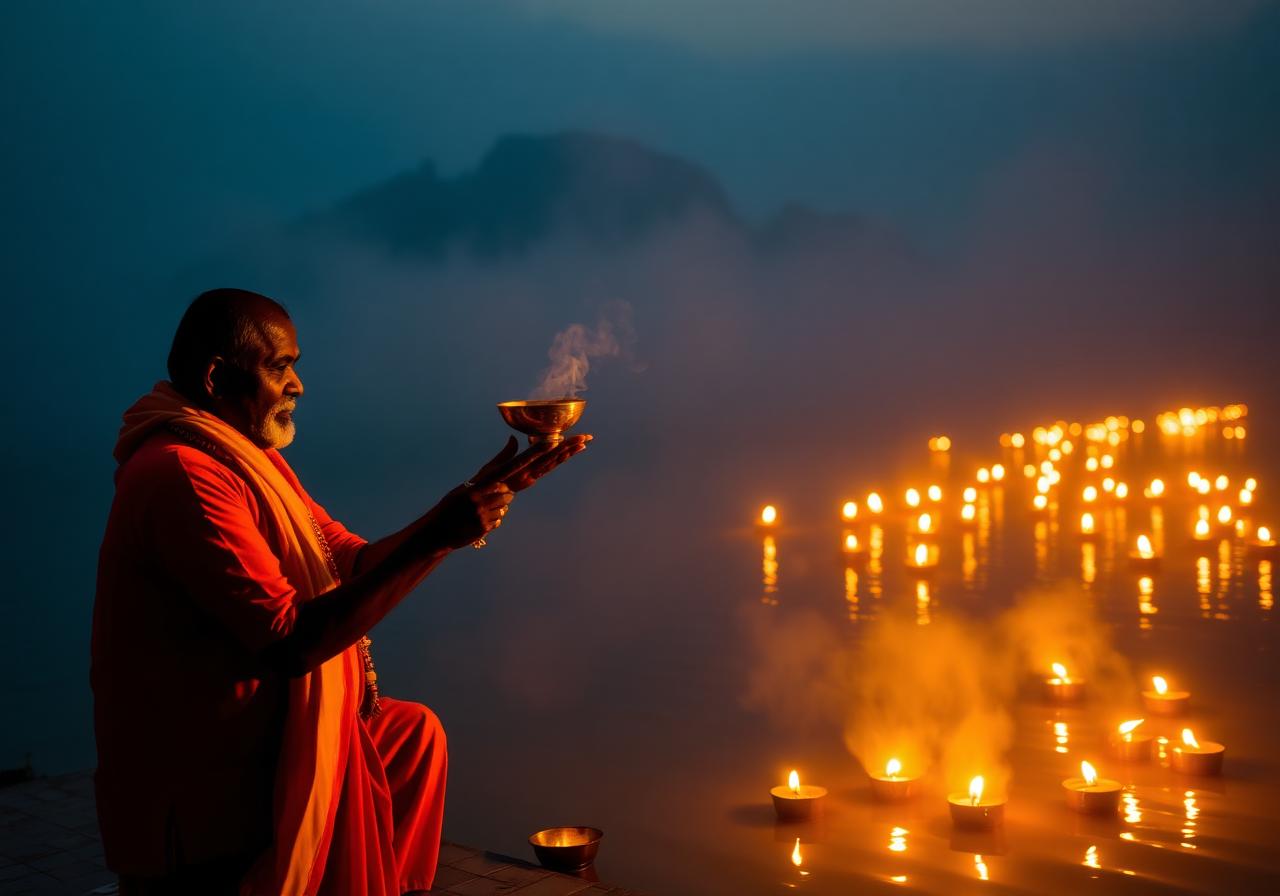
Shahi Snan
The royal bath — the most sacred moment of the Kumbh. Akharas process to the ghats in a precise order set by tradition; pilgrims wait for their dip after the saints, believing the waters carry the punya of every order that has bathed before.
Peshwai Procession
Days before each Snan, akharas enter the city in a royal procession of elephants, horses, banners and chants. The Peshwai is the Kumbh's public announcement — a living darshan for those who line the streets.
Akhara Traditions
Each akhara guards its own lineage, dress, banner and weapon — preserving martial, philosophical and ritual traditions for the next generation of saints.
The Pilgrim's Journey
For most devotees, the Kumbh is a quiet personal pilgrimage — early bath, temple darshan, satsang and the gentle walk between Nashik and Trimbakeshwar as an act of surrender.
Spiritual Significance of Bathing
Snan during the Kumbh is more than a wash; it is a ritual of release — of debts, of karma, of the small self — performed in waters that, the Puranas say, briefly hold the touch of Amrit.
Resources & Downloads
Official documents for pilgrims, families and group travel coordinators.
Resources available in Marathi, Hindi and English.